









Your lab report says LDL 142 mg/dL, flagged in bold. Last year, your doctor might have shrugged. In 2026, that same number can lead to a very different conversation.
In March 2026, the American College of Cardiology and the American Heart Association released a new dyslipidemia guideline. It replaced the 2018 rules and changed three things patients will notice: LDL goals are back, risk is scored with a new calculator, and treatment can start earlier in life.
This guide explains what your LDL number means now, how your doctor decides on a statin, and which extra tests are worth asking for. If you haven’t had a lipid panel in the last few years, a cholesterol test at our clinic is the place to start.
What the 2026 Cholesterol Guidelines Changed
| Area | Old Approach (2018) | New Approach (2026) |
| Risk calculator | Pooled Cohort Equations | PREVENT calculator, with kidney function and BMI built in |
| LDL goals | Mostly dropped; “percent reduction” instead | Specific LDL and non-HDL goals by risk level |
| Age to act | Mostly 40 and up | Earlier treatment for high lifetime risk, including some adults 30 and under |
| Lp(a) | Optional risk enhancer | Measure once in every adult’s lifetime |
| Coronary calcium (CAC) scan | Tiebreaker | Stronger role, with its own LDL goals |
| Non-statin drugs | Limited | Clear add-on roles for ezetimibe, PCSK9 inhibitors, inclisiran |
The theme is simple. Lower is better, and earlier is better.
What Your LDL Number Means
LDL cholesterol is the main carrier of cholesterol into artery walls. Over decades, it builds plaque. The total amount of LDL you’re exposed to over your lifetime matters more than any single reading.
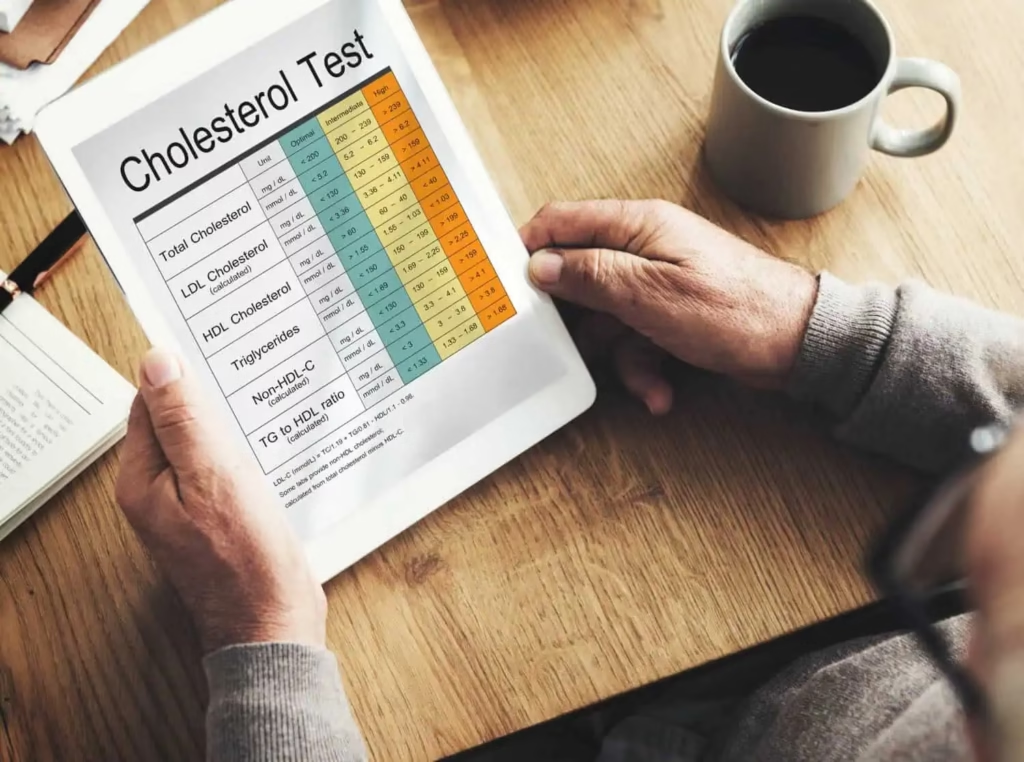
| LDL Level (mg/dL) | Category | General Meaning |
| Under 100 | Optimal | Good for most people without heart disease |
| 100 to 129 | Near optimal | Fine at low risk; may be too high with other risk factors |
| 130 to 159 | Borderline high | Treatment depends on your risk score |
| 160 to 189 | High | Statin often reasonable even at low 10-year risk |
| 190 or higher | Very high | Statin recommended; check for familial hypercholesterolemia |
Here is the catch. Your LDL alone doesn’t decide treatment. A 35-year-old nonsmoker and a 62-year-old with diabetes can share the same LDL and need completely different plans.
The Other Numbers on Your Lipid Panel
- HDL: Higher is generally better, but raising HDL with drugs hasn’t reduced heart attacks.
- Triglycerides: Over 150 mg/dL signals metabolic risk; over 500 raises pancreatitis risk.
- Non-HDL cholesterol: Total cholesterol minus HDL. It captures every artery-clogging particle and now has its own goals.
Most patients no longer need to fast for a routine lipid panel. Your doctor may ask you to fast if your triglycerides were high before.
How Your Doctor Decides: The PREVENT Risk Score
The 2026 guideline uses PREVENT, the same calculator now used for blood pressure decisions. It estimates your 10-year and 30-year risk of heart attack, stroke, and heart failure. Inputs include age, sex, cholesterol, blood pressure, diabetes, smoking, BMI, and kidney function measured by eGFR.
Because PREVENT runs lower than the old calculator, the risk cutoffs are lower too. Our cardiovascular care visits calculate this score with you in the room.
Statin Decision Table by 10-Year PREVENT Risk
| 10-Year PREVENT Risk | Risk Level | What the 2026 Guideline Points To |
| Under 3% | Low | Lifestyle first. Moderate-intensity statin reasonable if LDL is 160 to 189 or 30-year risk is 10% or higher |
| 3% to under 5% | Borderline | Shared decision; LDL goal under 100 if treated |
| 5% to under 10% | Intermediate | Moderate or high-intensity statin reasonable; CAC scan helps decide |
| 10% or higher | High | High-intensity statin, cut LDL by at least 50%, goal under 70 |
| Prior heart attack, stroke, or stent | Very high (secondary prevention) | Goal LDL under 55 and non-HDL under 85, adding non-statin drugs if needed |
Who Should Start Earlier
The guideline now recommends statin treatment earlier for:
- Adults with familial hypercholesterolemia
- Adults 30 or younger with LDL of 160 mg/dL or higher
- People with a strong family history of early heart disease
- People with high 30-year PREVENT risk, even when 10-year risk looks low
That last point matters for patients in their 30s and 40s. A low 10-year number can hide a high lifetime risk.
Special Groups With Clear Statin Recommendations
- Diabetes without heart disease: Statin recommended. Our diabetes and hormone care folds lipid treatment into your A1C plan.
- Chronic kidney disease stages 3 and 4: Intensive therapy, LDL goal under 55.
- HIV on stable treatment, ages 40 to 75: Statin recommended.
- Cancer survivors: Statin recommended.
- Pregnancy or planning pregnancy: Individualized; most people pause statins.
Two Tests Worth Asking About
Lipoprotein(a): Once in Your Lifetime
Lp(a) is a genetic cholesterol particle. Diet and exercise barely change it. About 1 in 5 people carry elevated levels and don’t know it. The 2026 guideline now says every adult should have it measured once.
An Lp(a) of 50 mg/dL or higher means your doctor will push LDL lower and manage blood pressure and other risks more aggressively. If you have a family history of early heart attack with “normal” cholesterol, this test often explains it.
Coronary Artery Calcium (CAC) Scan
A CAC scan is a quick, low-dose CT that measures calcified plaque in your heart arteries. It helps when your risk is borderline or intermediate and the statin decision is unclear.
| CAC Score | What It Suggests |
| 0 | Statin can often be delayed in borderline-risk adults; recheck later |
| 1 to 99 | Plaque is present; favors starting a statin |
| 100 to 999 | Statin with LDL goal under 70 and non-HDL under 100 |
| 1,000 or higher | Very high risk; cut LDL 50% or more, goal under 55 |
ApoB testing can also help after you reach your LDL goal, especially with high triglycerides or diabetes.
Do You Need a Statin? Common Concerns Answered
“I’d rather try diet first.”
That’s reasonable at low or borderline risk. Give it 3 months, then recheck. Diet changes typically lower LDL by 10 to 20%. A moderate-intensity statin lowers it by 30 to 49%, and high-intensity by 50% or more. Our guide to lifestyle changes that matter for your heart covers the habits with the biggest payoff, and supervised weight loss helps when triglycerides are part of the picture.
“Statins cause muscle pain.”
Some people do get muscle aches. Blinded trials show that most muscle symptoms happen just as often on placebo. If you have aches, your doctor can switch statins, lower the dose, try alternate-day dosing, or add a non-statin.
“Are statins bad for my liver or blood sugar?”
Serious liver injury is rare. Statins slightly raise blood sugar in people already close to diabetes, but the heart protection outweighs that risk for nearly everyone who qualifies.
“What if a statin isn’t enough?”
Your doctor can add ezetimibe (a low-cost pill), a PCSK9 inhibitor injection, or inclisiran (an injection given twice a year after the first doses). Bempedoic acid is another option for people who can’t tolerate statins. Our internal medicine physicians manage these step-ups and the follow-up labs.
Your Cholesterol Action Plan by Age
| Age | What to Do |
| 20s to 30s | Lipid panel at least once; Lp(a) once; earlier treatment if LDL is 160 or higher or family history is strong |
| 40s | Lipid panel every few years; PREVENT score at physicals |
| 50s and 60s | Recheck every 1 to 3 years; CAC scan if the statin decision is unclear |
| 70s and up | Individualized; statins still help many older adults with good life expectancy |
Retest 4 to 12 weeks after starting or changing a statin, then every 3 to 12 months as needed.
North Texas Factors That Affect Cholesterol
| Local Factor | Effect | Practical Fix |
| Fried and smoked-meat heavy meals | Higher saturated fat and LDL | Swap 2 meals a week for fish, beans, or grilled chicken |
| High diabetes rates in Texas | Raises statin eligibility | Test A1C alongside your lipids |
| Summer heat cuts outdoor exercise | Less activity, higher triglycerides | Walk early morning or use indoor tracks |
| High-deductible insurance | People skip follow-up labs | Bundle labs into one visit; use membership pricing |
What Cholesterol Treatment Costs
Generic atorvastatin and rosuvastatin are among the least expensive drugs in the U.S., often a few dollars a month with discount programs. A lipid panel is a routine, low-cost blood test. Lp(a) is a one-time test.
Compare that to a heart attack, which brings hospital bills, cardiac rehab, and lost work. For uninsured patients, our Direct Primary Care membership includes basic lab panels and posts advanced test pricing upfront.
Frequently Asked Questions
Is LDL 130 too high?
It depends on your risk. At low risk, lifestyle changes may be enough. With diabetes, kidney disease, or high PREVENT risk, it’s above goal.
Do I need to fast for a cholesterol test?
Usually no. Your doctor may request fasting if triglycerides were high before.
Can I stop my statin once my LDL is normal?
No. Your LDL is normal because of the statin. Stopping usually returns LDL to its old level within weeks.
Does the 2026 guideline apply to me if I already take a statin?
Yes. Ask whether you have an LDL goal now and whether you’ve had Lp(a) checked.
Know Your Number and Your Risk
Your LDL number means more when it sits next to your PREVENT score and your Lp(a). Walk in to our Gainesville primary care clinic, open 7 days a week at 800 W Highway 82 (940-301-5000), or visit our Providence Village location weekdays at 26631 US Hwy 380 E, Suite A (940-686-7500). We’ll draw your labs on-site and walk you through what the 2026 guidelines mean for you.