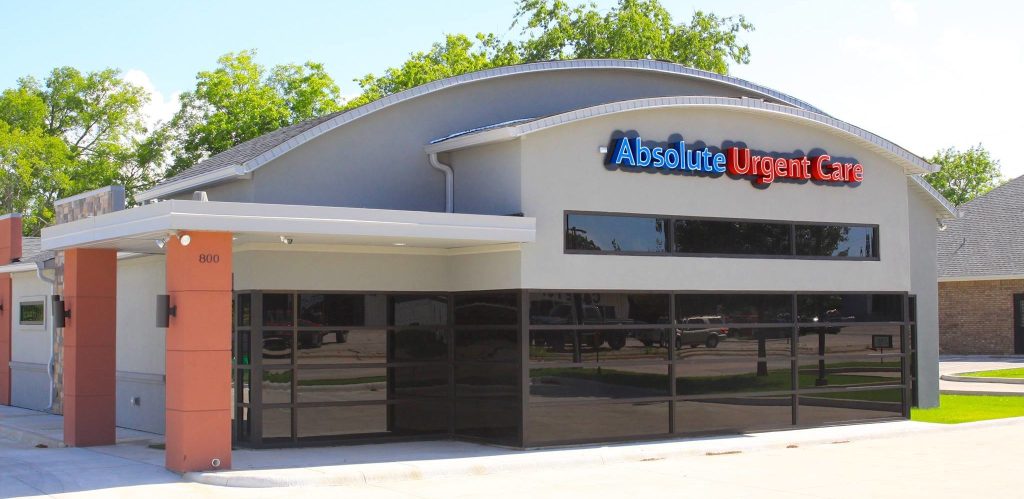














Two clinics sit on the same street. One sign reads “Family Medicine.” The other reads “General Practice.” Most patients assume the labels mean the same thing. In the United States, they do not.
The difference comes down to residency training and board certification, and it changes what your doctor is credentialed to handle without sending you elsewhere.
What Family Medicine Actually Means
Family medicine is a recognized medical specialty. A family physician completes four years of medical school, then a residency of 36 months in an ACGME-accredited family medicine program. The American Board of Family Medicine requires the final two years to be completed in the same program, specifically so residents build continuity-of-care experience with the same patient panel.
That residency spans six clinical areas: pediatrics, obstetrics and gynecology, internal medicine, psychiatry and neurology, surgery, and community medicine. A family physician therefore treats a newborn, that newborn’s mother, and that mother’s father inside the same practice.
Board certification follows. The ABFM was founded in 1969 as the 20th member board of the American Board of Medical Specialties, and it was the first ABMS board to issue time-limited certificates, which means recertification is mandatory rather than optional. Osteopathic family physicians certify through the American Osteopathic Board of Family Physicians.
Our family medicine team practices under this model at both North Texas locations.
What “General Practice” Means in the United States
“General practitioner” is not an ABMS-recognized specialty in the US. Historically, a GP was a physician who entered practice after a one-year rotating internship without completing a full specialty residency. The term survives colloquially, and patients often use “GP” when they simply mean “my regular doctor.”
This creates real confusion, because the same two letters mean something completely different abroad. In the United Kingdom, Ireland, and Australia, “GP” is a formal credential earned through a structured training pathway with its own royal college. A British GP and an American “general practitioner” are not equivalent.
Why the Label on the Door Matters
| Comparison Point | Family Physician (MD/DO) | US “General Practitioner” | UK GP |
|---|---|---|---|
| Residency required | 36 months, ACGME-accredited | Historically none beyond internship | Structured GP training programme |
| Certifying body | ABFM or AOBFP | None standardized | RCGP |
| ABMS-recognized specialty | Yes | No | Not applicable |
| Recertification required | Yes, time-limited certificates | Not standardized | Yes, revalidation |
| Ages treated | Infants through geriatrics | Varies by clinician | All ages |
| In-office procedures | Skin procedures, joint injections, laceration repair, minor surgery | Varies widely | Varies |
Verify the clinician’s credential rather than the building signage. The American Board of Medical Specialties (ABMS) maintains a public database of board-certified physicians, and any reputable clinic will confirm a provider’s board status over the phone.
Family Medicine vs Internal Medicine vs Urgent Care
Patients rarely compare only two options. Three doors are usually open at once, and picking the wrong one costs money and time.
Internal medicine physicians train for three years in adult medicine. They handle complex chronic disease in adults but do not treat children. Our internal medicine services cover that adult-focused scope.
Urgent care treats episodic problems the same day. It is built for the sprained ankle at 6 p.m. and the fever that started Saturday morning. It is not built to manage your hypertension across a decade.
Family medicine covers the whole family and carries the relationship forward. That continuity is not a marketing word. A 2020 systematic review in the British Journal of General Practice examined 12 studies measuring all-cause mortality against continuity of care, and 9 of them found a statistically significant protective association with seeing the same clinician over time.
Which Provider Do You Actually Need?
| Your Situation | Best First Stop | Why |
|---|---|---|
| Annual physical or wellness exam | Family medicine PCP | Establishes a baseline and a records history |
| New diagnosis of diabetes or high blood pressure | Family medicine PCP | Needs titration, labs, and follow-up over months |
| Child’s ear infection at 7 p.m. | Urgent care | Same-day access, extended hours |
| Sports or DOT physical with a deadline | Urgent care or PCP | Walk-in availability decides it |
| Medication refill for a stable condition | Family medicine PCP | Requires the prescriber who owns the chart |
| Cut that may need stitches | Urgent care | Time-sensitive wound closure |
| Rash that has not improved in three weeks | Family medicine PCP | Pattern over time drives the diagnosis |
| Chest pain, stroke signs, severe breathing trouble | Emergency room | Life-threatening, needs hospital resources |
Absolute Urgent Care runs both models under one roof, which is why patients in Cooke and Denton counties can start at urgent care Gainesville for an acute problem and transition into an ongoing primary care relationship without changing buildings or repeating their history.
The North Texas Access Problem
Texas carries a documented primary care physician shortage, and the state maintains formal Health Professional Shortage Area designations through its Primary Care Office. That shortage is not evenly distributed.
Gainesville sits in rural Cooke County, where the supply of primary care clinicians is thin and the nearest large hospital systems are 45 to 70 minutes away in Denton or Sherman. Providence Village sits inside one of the fastest-growing corridors in Denton County, where the constraint is not distance but demand: new rooftops outpace new exam rooms, and new-patient appointments lead times stretch.
Both problems produce the same patient behavior. People delay establishing care, then use emergency rooms for issues a primary care visit would have resolved for a fraction of the cost.
Same-day primary care access changes that math. Patients at primary care Gainesville and primary care in Providence Village can be seen without waiting weeks for a first appointment.
Cost, Coverage, and Continuity
The specialty label does not set your copy. Your plan’s network status, the provider’s taxonomy code, and the level of service billed do. Two things follow from that.
First, an urgent care visit usually sits in a higher copay tier than an established primary care office visit on most commercial plans. Verify against your own plan documents rather than a general rule.
Second, a clinic that offers both settings lets you route yourself into the cheaper option when the problem is not urgent. Review your coverage on our insurance and payment page before your visit.

The Direct Primary Care Alternative
A third model exists. Direct primary care replaces insurance billing for routine care with a flat monthly membership. Patients get longer visits, direct clinician access, and predictable pricing. It does not replace catastrophic coverage, and it does not cover hospitalization or specialists.
| Model | Cost Structure | Appointment Lead Time | Same Clinician Each Visit | After-Hours Access |
|---|---|---|---|---|
| Insurance-billed primary care | Copay plus deductible | Days to weeks | Usually | Limited |
| Urgent care | Higher copay or self-pay visit fee | Walk-in | No | Extended hours |
| Direct primary care | Flat monthly membership | Same or next day | Yes | Direct clinician contact |
Our direct primary care program is built for families and small employers who want predictability without giving up local access.
Employer Group DPC Benefits in Cooke and Denton Counties
For small businesses across Cooke and Denton counties including local manufacturers, agricultural operations, and service providers employee health coverage presents a persistent financial and logistical challenge. Conventional insurance plans often carry high deductibles that cause employees to delay necessary routine care, leading to increased absenteeism and unmanaged health conditions that eventually result in costly emergency room visits.
Direct Primary Care (DPC) restructures this relationship by removing insurance billing friction. Employers pay a predictable monthly membership fee per employee, granting workers direct access to primary care without copays or deductibles for routine visits. In rural-to-suburban growth corridors like Gainesville and Providence Village, where traditional primary care appointment lead times can stretch for weeks, DPC provides same-day or next-day appointment availability. This immediate access allows workers to address acute minor illnesses, receive preventive screenings, and manage chronic conditions promptly, minimizing lost work time and maintaining workplace productivity.
Pediatric Coverage: Family Medicine vs. Med-Peds
When evaluating pediatric care options within primary care, families often encounter both Family Medicine and Internal Medicine-Pediatrics (Med-Peds) physicians. Understanding the distinct training pathways helps clarify which model best fits your household’s needs.
Family Medicine physicians complete a 36-month residency covering six core clinical areas, integrating pediatrics alongside adult medicine, obstetrics, and geriatrics. This broad foundation enables a single Family Medicine clinician to deliver continuous care to newborns, parents, and grandparents within the same practice, focusing on generational health patterns and household continuity.
In contrast, Med-Peds physicians complete a four-year combined residency dedicated specifically to two distinct disciplines: adult internal medicine and general pediatrics. Because their pediatric training is equivalent in depth to a categorical pediatric residency, Med-Peds providers are uniquely equipped to manage complex pediatric chronic diseases, congenital conditions, and specialized adolescent transitions. While Med-Peds excels in high-complexity pediatric care, Family Medicine remains the benchmark for holistic, multi-generational household continuity.
How to Choose and Switch
- Confirm the clinician is board certified in family medicine, internal medicine, or another ABMS specialty.
- Ask whether the clinic accepts PCP assignments from your specific plan.
- Ask what the current new-patient appointment lead time is.
- Ask who covers evenings, weekends, and holidays.
- Request records transfer from your previous clinic in writing, and confirm receipt before your first visit.
- Confirm on-site labs and imaging, which prevent a second trip on a separate day.
You can review credentials and backgrounds for our clinicians on the meet our team page, and preventive visits are scheduled through annual physicals.
Bottom Line for Gainesville and Providence Village Patients
Family medicine is a board-certified specialty with a defined 36-month residency and mandatory recertification. “General practice” in the US is a descriptive phrase without a standardized training requirement behind it. When you compare clinics, compare credentials, scope, appointment access, and whether the same clinician will still be there next year.
For a deeper comparison of adult-focused versus whole-family care, read our breakdown of internal medicine versus family medicine.
Absolute Urgent Care serves Gainesville, Providence Village, Valley View, Lindsay, Cross Roads, Aubrey, and Paloma Creek with urgent care and primary care in the same clinic. Call 940-301-5000 in Gainesville or 940-686-7500 in Providence Village, or contact us to establish care.
This article is educational and does not replace evaluation by a licensed clinician.
Frequently Asked Questions
Is a family doctor the same as a general practitioner?
Not in the United States. A family doctor completes a 36-month accredited residency and holds board certification. “General practitioner” is an informal term with no standardized US training requirement.
Can an urgent care provider be my primary care provider?
Yes, when the clinic employs providers with primary care credentials who accept PCP assignment from your plan. Absolute Urgent Care operates dedicated primary care services at both locations.
What is the difference between family medicine and internal medicine?
Internal medicine treats adults only, after a three-year adult-focused residency. Family medicine treats every age group, including children and pregnant patients.
How do I switch my primary care doctor?
Choose the new clinic, confirm it accepts your plan, update your PCP designation with your insurer if your plan requires one, and request a written records transfer from your previous provider.
Does it cost more to see a family physician than a general practitioner?
Price is driven by network status and the service level billed, not by the specialty label on the sign. Confirm coverage with your plan before the visit.